






lifestyle
The Best Bedding Material for Summer: Your Comfort Guide
As the days get longer and nights grow warmer, it’s not uncommon to struggle with cool and comfortable sleep. If you feel hot and restless on summer nights, it can get in the way of good sleep, and this is where choices like the right bed sheets become not just a luxury, but an essential. In this guide, we'll help you pick the best spring and summer bedding, running through fabrics and styles that offer the highest comfort and allow you to sleep deeply.
Understanding the Importance of Summer Bedding Choices
Just like your clothing, certain types of bedding can trap heat and make your body temperature go up. The key to great summer bedding lies in finding fabrics that promote airflow, breathability and coolness.
On one side, the issue is that many people get hot when they sleep, but then there’s the external factor of the seasonal weather itself. Let's look at how hot weather can change your sleep and why, and how this all ties back to fabric selection.
How Warmer Nights Impact Your Sleep Cycle
Your body follows a natural rhythm where a small drop in core temperature is a sign that it is time to sleep. On a hot summer night, it is harder for your body to cool down and this means you may take more time to drop off. You might also miss out on the deeper parts of sleep that help you feel rested, and this leaves you feeling tired.
When you get too warm, restless sleep comes into play. You’ll wake up more, sleep fitfully, and break your deep sleep cycle, which is key to helping your body function effectively. Put it this way, these sleep stages all contribute to things like memory retention, fixing cells, and staying generally healthy.
This is why keeping your body temperature cool and steady is so important for good quality sleep. And the right bedding helps your body regulate this temperature, so you can move through each sleep stage with ease. In effect, we’re talking about solving two potential and interlinked issues – your body’s temperature regulation and the external environment in your bedroom.
Why Breathability Matters for Hot Sleepers
Whether you’re a naturally hot sleeper or battling warmer weather, breathable bedding is the essential component for a good night’s sleep. And this isn’t a new concept – people have always understood that different fabrics offer better breathability. When people talk about this breathable quality, they mean how well your sheets let air move in and out.
Linen is a great example where heat conductivity helps.
Cooling sheets, like linen, are made with materials that let air move and wick moisture away, pulling sweat off your skin. Because of this, you feel dry and cool all night without that sticky feeling. It really is as simple as making a small change to your bedding to sleep much better.
Here are the main benefits of breathable bedding:
-
Temperature Regulation: Helping to keep your body temperature steady and comfortable.
-
Moisture Wicking: Pulling sweat away from your skin to help you stay dry.
-
Improved Airflow: Allowing the air to move around you, so heat doesn’t stay trapped between your skin and the covers.
Layering Tips for Spring Summer Bedding
As we know, in the UK the weather can be changeable, so learning how to layer your bed for spring and summer is a great workaround. For cooler spring nights through to warmer ones in summer, layers of high-quality, breathable sheets act as a customisable base.
A flat sheet is a key part of summer layering. When nights get warm, this is a perfect way to stay comfortable on its own, and if the night gets colder, a lightweight bedspread or a thin duvet can be pulled up over the sheet. This way, it is easy to add or take away layers as your body temperature changes during the night.
Follow these simple tips to make a bed with perfect layers:
-
Start with a breathable base: Go for a good, fitted sheet set made from cotton or linen for soft, breathable comfort.
-
Incorporate a flat sheet: Either beneath a bedspread or seasonal duvet, or on its own, so you can layer up or strip it down depending on the night.
-
Add a lightweight top layer: A lightweight duvet, quilt, or bedspread will add more warmth for you when you need it.
And if you’re wondering whether to ditch the duvet or bedspread completely, here’s a quick comparison:
|
Feature |
Lightweight Duvet/ Bedspread |
Flat Sheet Only |
|
Comfort |
Provides a cosy, enveloped feeling. |
Offers minimal, light coverage. |
|
Warmth |
Offers a light layer of insulation. |
Provides very little warmth. |
|
Best For |
People who like the weight of a cover. |
Very hot sleepers or heatwaves. |
|
Versatility |
Can be layered with sheets for flexibility. |
Can be paired with a blanket if needed. |
Top Bedding Weaves and Textures for the Best Bedding for Summer
The feel and look of your bedding is not just about the material; it’s the way the fabric is woven and its innate texture, which has a big impact on your comfort, especially when it's hot. Weaves such as percale and sateen have a very specific skin feel, as do textured weaves like gingham and seersucker. As well as changing how a fabric feels, weaves affect how air moves through.
Percale vs. Sateen: Which is Right for Your Sleep Style?
For cotton bed sheets, there are two common types. Percale is made with a one-thread-over, one-thread-under pattern with a weave that looks like a grid. This gives the sheets a crisp feel, with a cooling effect and a matte texture. Percale is inherently good for hot sleepers or those who like the feel of clean hotel bed sheets.
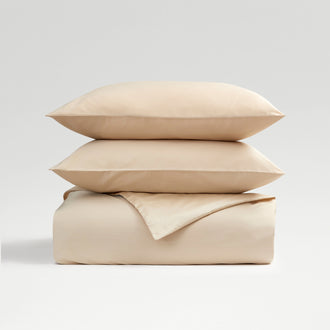
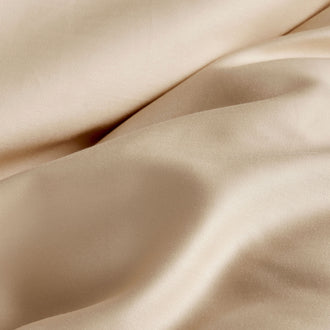
Sateen, on the other hand, uses a weave that goes one under and three or four over. This results in a smooth feel and a lustrous look. Sateen is also known as a warmer and slightly weightier fabric than percale. If you feel cold at night or want something silky against your skin, sateen is a good choice.
There are some fabrics that go against the grain here, though. An example is our Premium Sateen, which does have the classic smooth sateen feel, but it’s woven in a very specific, technical way, with a hollow core in the yarn, which regulates temperature more effectively than your average fabric, so it’s comfortable whatever the weather.
|
Weave |
Percale |
Sateen |
|
Feel |
Crisp, cool, and matte. |
Silky, smooth, and lustrous. |
|
Breathability |
Highly breathable. |
Less breathable, slightly warmer. |
|
Best For |
Hot sleepers and warm climates. |
Colder sleepers or those who prefer a silky feel. |
|
Appearance |
Classic, hotel finish. |
Sheen and luxurious drape. |
Gingham and Seersucker: Trends and Tactile Appeal
Newer summer bedding styles are bringing back old favourites with a focus on feel. Gingham, with that British checked pattern that many people know, is a popular choice. Known for things like summer school uniforms, it’s breathable, comfortable and soft. It’s also a relaxed, homey fabric for the bedroom, with excellent airflow properties, which is just right for summer bedding.
Seersucker is another fabric-first choice. Crafted from yarn to finished fabric at Christy, just like our Gingham, we carefully follow a traditional weave pattern, with a super soft and relaxed feel, which also helps air flow through and keeps you cool.
Last word on the best bedding material for summer
Choosing the best bedding for warm nights is important for good sleep. Bedding made from natural fibres like cotton and linen promotes air flow and helps lower your body temperature while you sleep. Choosing the fabrics that feel best to you, the weaves that deliver exceptional comfort, and layering your bedding the right way all form part of the big picture for summer beds. If you have any questions about our bedding ranges, contact us today.
Frequently Asked Questions
What material keeps you coolest on hot summer nights?
The best sheets to keep you cool are made from natural, breathable materials. Linen sheets help pull sweat away from your body, and cotton sheets, especially those with a relaxed and airy feel, help keep nights comfortable.
Should I use a duvet or just a sheet in summer?
A light duvet with a low tog rating, between 1.0 and 4.5, gives you comfort but not too much heat, but on the hotter summer nights, many people feel that just a flat sheet from a soft, breathable fabric is enough to sleep well.
How do I pick summer bedding if I experience night sweats?
If you get night sweats, choose breathable bedding with moisture-wicking features. Cooling sheets made of linen or specially woven cotton work well as they are made to wick away moisture and promote airflow.

Related Reads

lifestyle
The 2026 Wimbledon Towel Collection: Strawberry, Heirloom Craft and a New Era of Design

lifestyle
Christy's Heirloom Collection: A Fresh Imagining of The Wimbledon Championships Towel

lifestyle